 by
by Moving to the Middle East for a tech consulting gig was a massive culture shock for me—not just the summer heat, but the digital borders. I vividly remember sitting in my Dubai apartment on day one, trying to make a quick WhatsApp video call back home, only to stare at a “Connecting…” screen forever. Naturally, my first instinct was to download a VPN.
But then a colleague texted me a terrifying news headline: “Expat Fined 2 Million Dirhams for VPN Use.”
I froze. Was I about to get deported over a phone call?
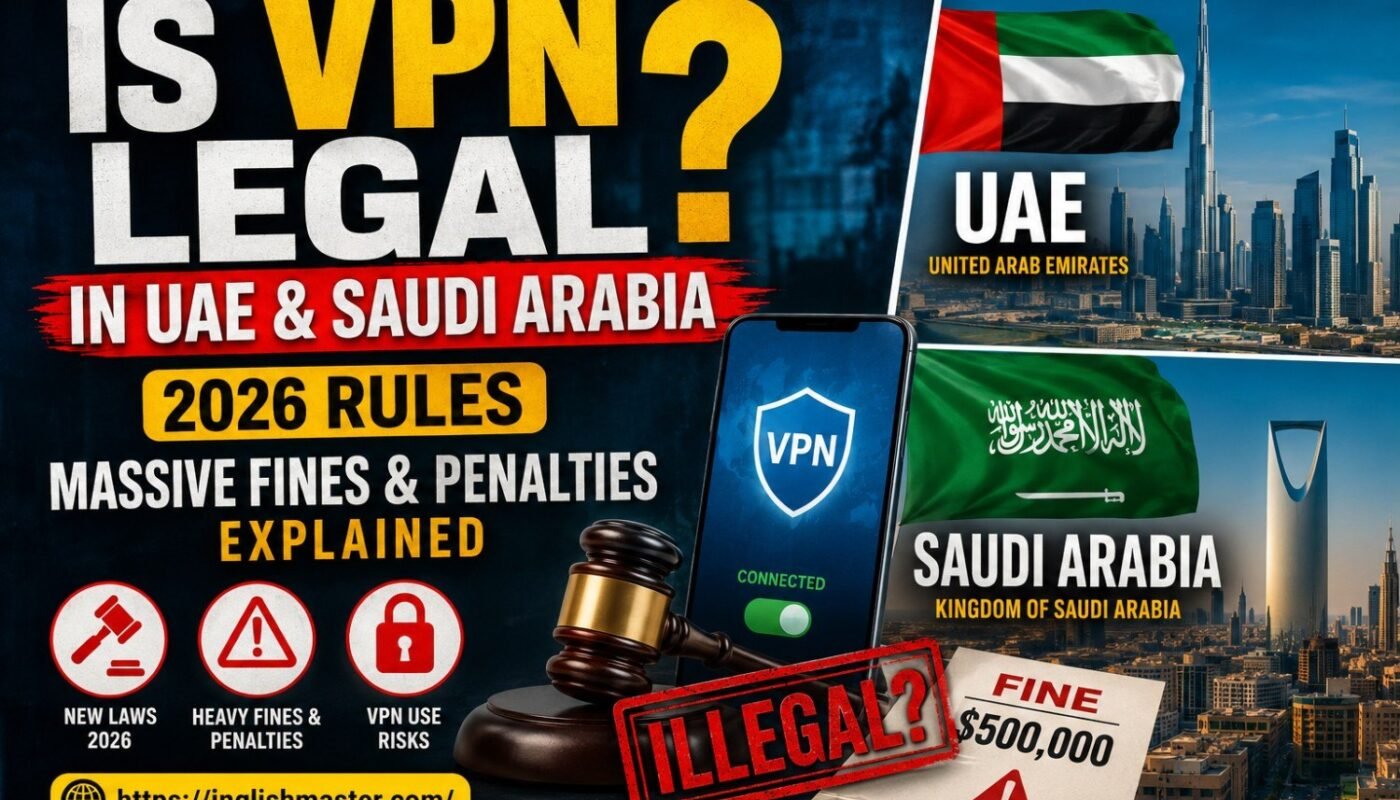
Over the years of living and working across Dubai and Riyadh, I’ve seen endless confusion and fear-mongering around this topic. Let me clear the air right now. The short answer is: No, simply having or using a VPN is not illegal in either the UAE or Saudi Arabia. But how you use it can easily land you massive fines or jail time in 2026.
Here is exactly what you need to know to stay out of trouble.
The UAE Cybercrime Law: The AED 2 Million Fine Explained
Let’s start with the Emirates. The panic mostly stems from Article 10 of the UAE Federal Decree-Law No. 34 of 2021. The law states that circumventing an IP address to commit a crime, or hide the commission of one, carries massive penalties. We are talking fines between AED 500,000 and AED 2,000,000, plus potential temporary imprisonment.
The key word here is intent. The Telecommunications and Digital Government Regulatory Authority (TDRA) actively allows companies, banks, and everyday users to use VPNs to access internal networks or secure their personal data. The law targets the criminal act, not the software itself.
Saudi Arabia’s “Tolerated but Monitored” Grey Zone
Over in Saudi Arabia, the situation is slightly different. The Saudi Communications, Space & Technology Commission (CST) and the Anti-Cyber Crime Law do not explicitly criminalize downloading a VPN app to your phone. However, VPNs sit in a “tolerated but monitored” grey zone.
Under Article 3 of the Saudi cybercrime law, accessing blocked websites or bypassing state censorship can trigger fines up to 500,000 SAR and a year in prison. For more severe infractions, like spreading extremist content, fines jump to 3 million SAR and heavy prison time. Just like in the UAE, local authorities care about the content you are consuming, not the tool you are using to protect your network traffic.
Real-World Scenarios: What is Safe vs. What is Illegal
Let’s break this down into everyday situations. Here is what I’ve personally experienced and observed:
1. Making WhatsApp or FaceTime Calls (The Greyest Area)
-
The Reality: VoIP services like WhatsApp, Skype, and FaceTime are blocked or severely restricted in both countries to protect local telecom revenues (like Etisalat or STC).
-
The Risk: Millions of expats use VPNs daily to call home. While authorities technically know this happens, they don’t generally kick down doors just for a WhatsApp chat. However, it is technically bypassing telecom rules. If you want a 100% legal, stress-free route in the UAE, use government-approved VoIP apps like BOTIM or GoChat.
2. Online Banking and Remote Work (100% Legal)
-
The Reality: Highly encouraged. If you are logging into your home country’s bank account from a Riyadh coffee shop, turning on your VPN is just basic cybersecurity. Encrypting your traffic on public Wi-Fi will never get you in trouble because there is no criminal intent.
3. Accessing Blocked Entertainment
-
The Reality: Using a premium service to watch the US library of Netflix or Hulu is generally considered low-risk by local authorities.
-
The Risk: While it violates the streaming platform’s own Terms of Service, it does not breach national security or public morality laws. You won’t get slapped with a million-dirham fine for watching The Office.
4. The Absolutely Illegal Stuff (Guaranteed Deportation)
-
The Reality: This is where people ruin their lives. Using a VPN to access pornography, online gambling casinos, locally banned dating apps, or anti-government content is a direct legal violation.
-
The Result: If caught, you will face the maximum fines (up to 2,000,000 AED or 500,000+ SAR), mandatory device confiscation, and guaranteed deportation.
Step-by-Step Guide to Staying Safe
If you are living in or traveling to the GCC this year, follow these rules to avoid becoming a cautionary tale:
-
Ditch the Free VPNs: Free apps on the App Store often leak your data and DNS requests. Invest in a paid, reputable service (like Surfshark, NordVPN, or ExpressVPN) with a strict no-logs policy and “obfuscated servers” that hide the fact you are even using a VPN.
-
Use it for Security, Not Crime: Keep your VPN active when connected to public Wi-Fi at Dubai Mall or a Starbucks in Jeddah to protect yourself from hackers.
-
Respect Public Morality Laws: Do not try to access gambling sites or adult content. The firewalls in these countries are highly advanced, and trying to bypass them for illegal activities is a fast track to jail.
-
Watch What You Say Online: Trolling, spreading rumors, or criticizing the government while hiding behind a VPN is a severe criminal offense. Anonymity does not equal immunity here.
Living in the Gulf requires adapting to local rules, but you don’t need to delete your VPN before going through airport security. I keep mine running on my phone and laptop every single day for work and banking. Just remember the golden rule: if an activity is illegal offline or on a regular connection, doing it with a VPN only multiplies the penalty. Use your common sense, respect the local culture, and you won’t have to worry about a massive fine ruining your life.