 by
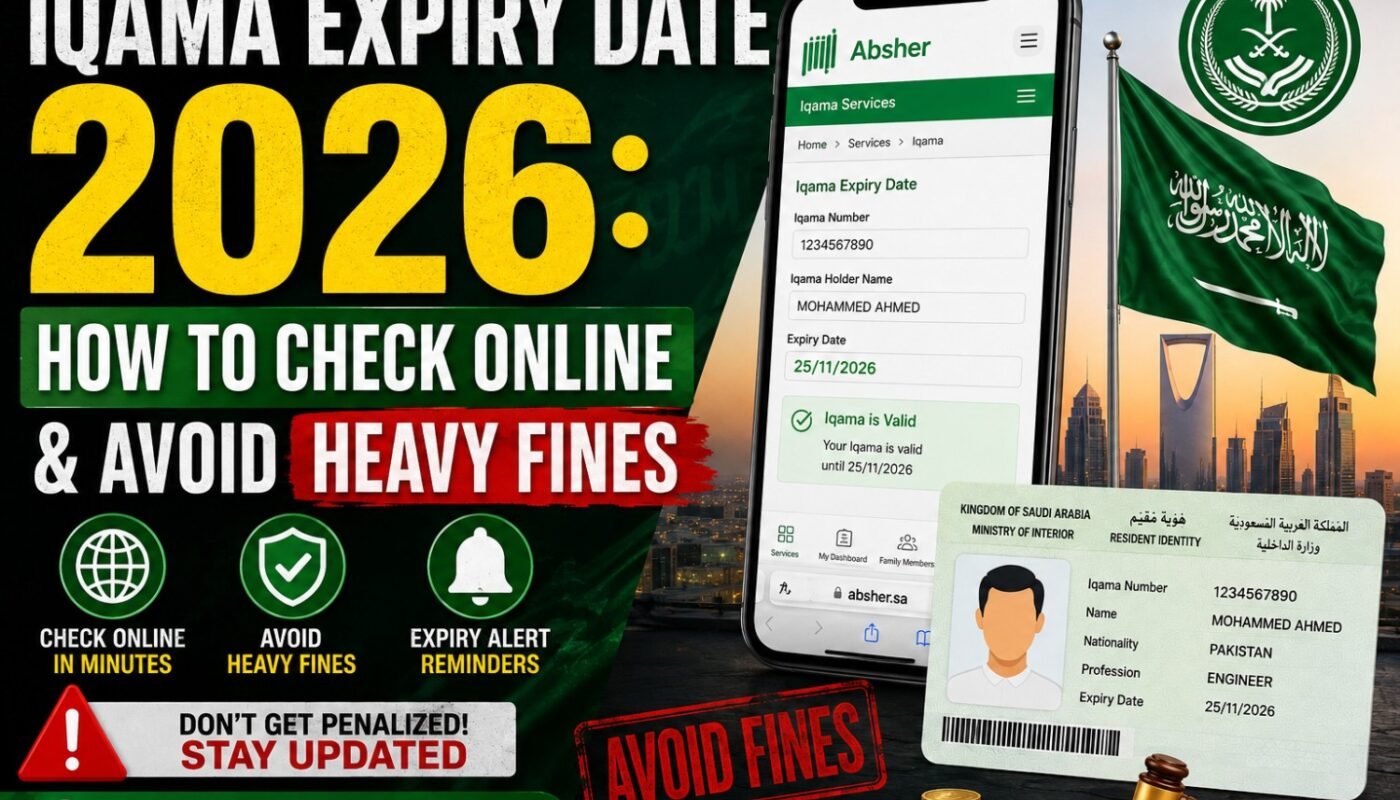
by If you are working in Saudi Arabia right now, grab your wallet and look at your Iqama card. Notice something missing? Yep, the expiry date.
A few years ago, the Saudi government stopped printing expiry dates on the physical Muqeem cards. They are now issued with a standard five-year physical validity, but your actual legal residency needs to be renewed digitally—usually every 3, 6, 9, or 12 months depending on your contract.
I can’t tell you how many expats I’ve met in Riyadh and Jeddah who assumed they were fine just because their plastic card looked valid. Then they try to withdraw cash at an Al Rajhi or SNB ATM, and their bank account is frozen. Worse, they get slapped with a hefty fine from Jawazat (the General Directorate of Passports) for an expired residency permit.
Let me walk you through exactly how to check your Iqama expiry date online in 2026, the penalties you need to dodge, and a few common mistakes that catch people off guard.
The Reality of Iqama Fines (Jawazat Penalties)
Before we get into the “how-to,” let’s talk about why you need to check this today. Saudi Arabia does not take residency violations lightly. If your Iqama expires, you don’t just get a slap on the wrist.
Here is the current penalty structure straight from Jawazat:
-
First Offense: SAR 500 fine.
-
Second Offense: SAR 1,000 fine.
-
Third Offense: SAR 1,000 fine plus deportation (Khuruj Nihad).
The 3-Day Grace Period Myth: There is a common rumor among expats that you have a 30-day grace period. This is false. Jawazat generally allows a tiny window of just 3 days after the expiry date before the SAR 500 fine drops. If your employer is dragging their feet on your renewal, you need to remind them before those three days run out, or someone is paying that 500 Riyal fine.
Method 1: The Absher App (The Easiest Way)
You likely already have the Absher app on your phone. If you don’t, you honestly can’t function smoothly in KSA. Checking your expiry date here takes less than 30 seconds.
Step-by-step:
-
Open the Absher App on your iPhone or Android and log in. You will need to enter the OTP sent to your phone.
-
Tap on your Profile Picture or name at the very top of the home screen.
-
Select My Personal Information.
-
Scroll down until you see Iqama Expiry Date.
Pro Tip: Absher will show the date in the Hijri (Islamic) calendar by default, followed by the Gregorian calendar. Always pay attention to the Gregorian date if you are used to it. Mixing up Islamic months is the number one reason expats miss their renewal deadline.
Method 2: Tawakkalna Services App
Tawakkalna started as a COVID-19 tracker, but the newer Tawakkalna Services app is now your digital wallet for everything in Saudi Arabia. This is actually my favorite way to check because it’s highly visual.
Step-by-step:
-
Open Tawakkalna Services and log in.
-
Tap on the Digital Document tab at the bottom of the screen.
-
You will see a digital version of your Iqama card right there. Tap on it.
-
The screen will open up details showing the exact expiry date.
If your Iqama is nearing expiration, the digital interface makes it very obvious so you aren’t caught off guard.
Method 3: The MHRSD (MOL) Website
Sometimes you need to check an Iqama status without logging into Absher—maybe because you are outside the Kingdom and lost access to your Saudi phone number. You can use the Ministry of Human Resources and Social Development (MHRSD / Wazarat Amal) portal.
Step-by-step:
-
Go to the official MHRSD portal online (search for “MOL KSA inquiry”).
-
Change the language to English if needed.
-
Select Query for Expatriate Employee.
-
Enter your Iqama number and the captcha code.
-
Hit search. It won’t give you deep personal details, but it will tell you if the Iqama is valid and show your work permit status.
What to Do If Your Iqama is Already Expired?
Let’s say you just checked, and your heart drops because the date has passed. Don’t panic, but act fast.
-
Contact your HR department immediately: By Saudi labor law, your employer is responsible for renewing your Iqama and paying the renewal fees.
-
Clear your traffic fines: Your company cannot renew your Iqama if you have unpaid Saher fines. If you got flashed speeding on King Fahd Road, pay it through your banking app via SADAD immediately. The system literally blocks the renewal until your traffic record is perfectly clean.
-
Check Health Insurance: Your medical insurance must be active and linked to the Council of Cooperative Health Insurance (CCHI) system for the renewal to go through.
-
Pay the Jawazat Fine: If you crossed the grace period, the SAR 500 fine must be paid through SADAD (under Alien Control/Jawazat services) before the system allows the renewal to process.
A Quick Word on Dependents
If you have your spouse or kids living with you in KSA, their Iqamas are tied directly to yours. If yours expires, theirs effectively expires too. This means their bank accounts freeze, and their travel outside the Kingdom is blocked. Always start reminding your HR department at least a month before the expiration date to account for any system delays or dependent levy payments.
Living in KSA is a fantastic experience, and the digital government systems like Absher and Qiwa have made life incredibly smooth. But they are strictly automated. The computer doesn’t care if you simply forgot, and it will apply fines automatically. Do yourself a favor: check your Tawakkalna or Absher app right now, take a screenshot of that expiry date, and set a calendar reminder on your phone a month in advance. You’ll thank yourself later.